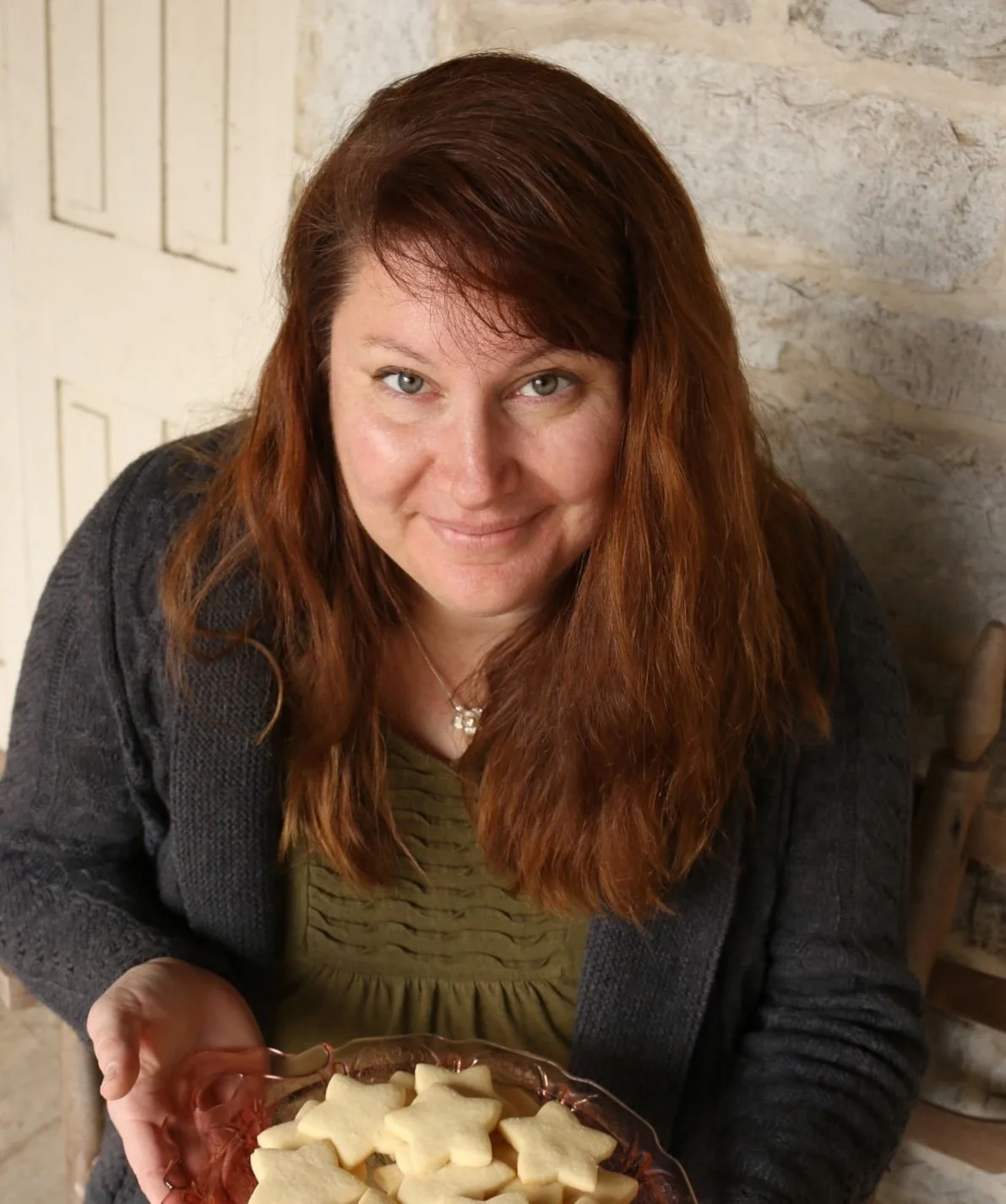
Gifts of a Southern Recipe: How My Family’s Teacakes Brought Sweetness to Life and Changed My Writing Forever
This essay is part of The Headlight Review’s series, “Southern Scrapbook,” edited by Sarah Shamaya. This series features authors who articulate how their Southern experiences influeced their writing. It is our love for the South and the authors who give the South a voice that drives this endeavor.
We hope to continue publishing pieces in “The Southern Scrapbook.” Any writer interested in participating may contact THR with a pitch, or we’ll be glad to look over a submission in its entirety.
Word count: 1500 or thereabouts. Multi-media essays are encouraged.
“Got something for you!” Grandpa Frey announced, enthusiastically waving a scrap of paper. I was on holiday break from college, visiting my grandparents in rural Arkansas. Grandpa’s gift turned out to be a cookie recipe:
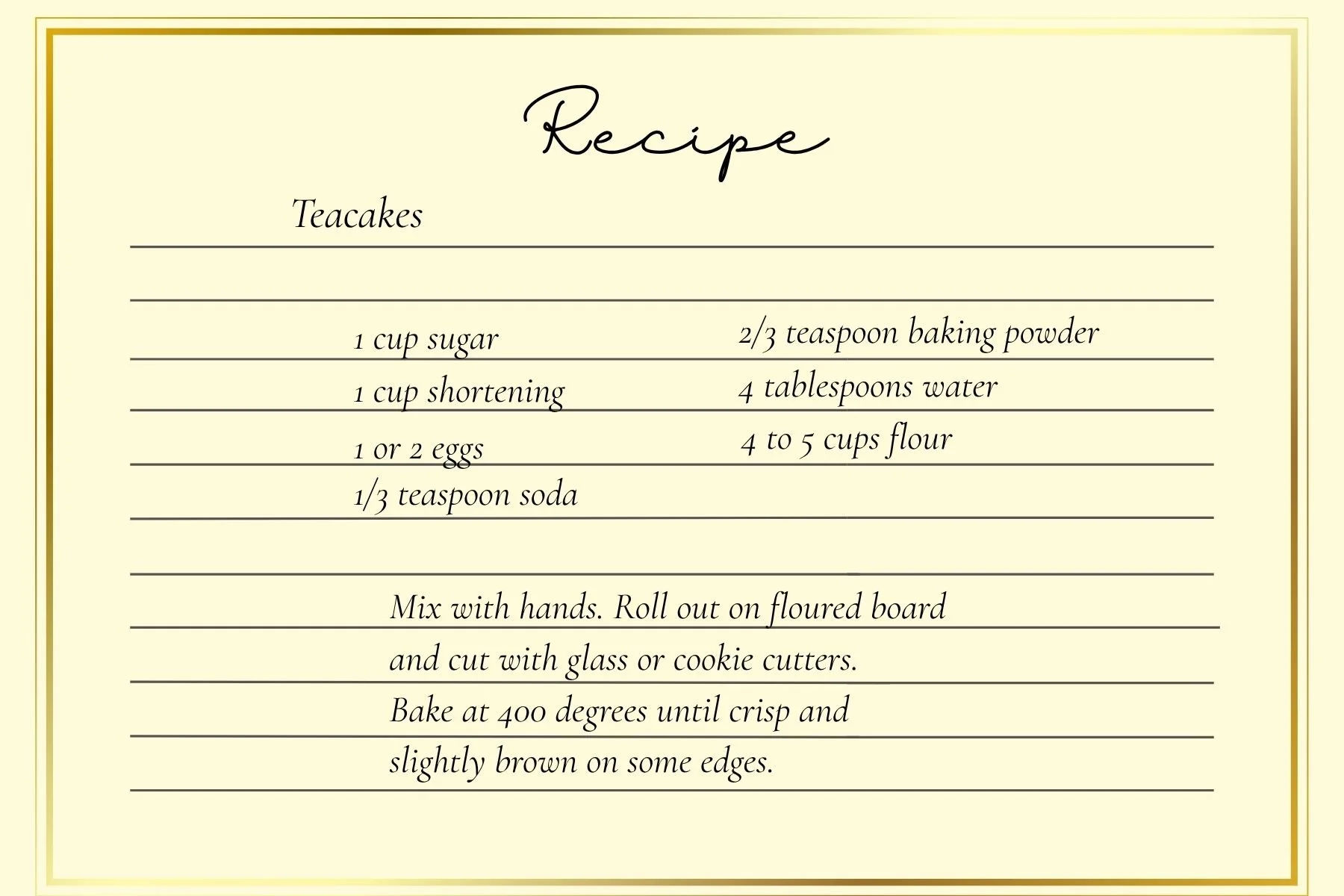
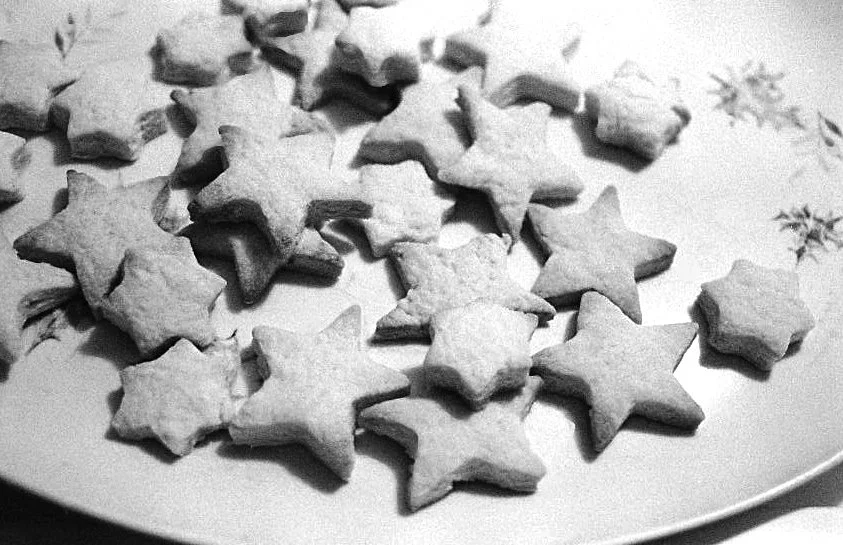
The cookies were the specialty of his maternal grandmother, Ellen Moseley. Ellen’s life spanned 1830 to 1900, so Grandpa had no chance to meet her. Thankfully, some older cousins had recently shared the recipe. That very night—with my own grandmother keeping me company—I made my first batch. All we had for a rolling pin was a wine bottle, but it worked just fine. (Now I wish I’d asked where in the heck my teetotaler grandparents got a wine bottle in that tiny cotton town!) That night the warm and fragrant old-fashioned kitchen was the place I most wanted to be.
Up until that December, my great great grandmother had been just a name on a pedigree chart, but the recipe made me curious. I soon discovered she was born in England and came to America as a teenager. Family lore holds that on the voyage there was a storm at sea and Ellen was almost washed overboard. A sailor grabbed the collar of her coat just before she vanished into the waves, preserving the family chain that would one day include me. She married young but then was widowed young. Ellen married a second time to my great great grandfather and together they carved an antebellum farm out of then-wild Arkansas. She gave birth to nine children. She lived long enough to see the calendar dates change from 1800s to 1900s then died just a day after becoming a widow a second time.
In the years that followed, I played with the recipe—committing to two eggs and four cups of flour, adding a little almond extract. Now the recipe suited modern tastes and became a holiday favorite. It brought the gifts of treats and tradition. By the time I’d had the recipe for a decade, my parents and grandparents were all dead and gone. These early losses and a longing for roots nudged me into a career in the history field. Over a century after Ellen’s death, as I prepared to move to Atlanta for a new job as an archivist, a friend handed me a battered black journal—part of the “1000 Journals Project.” An anonymous donor, now known to be San Francisco graphic designer Brian Singer, sent a thousand blank journals out into the world, inviting anyone interested to write an entry before passing it along. A note inside asked whoever used the last page to mail the journal to a certain address so it could be scanned for a community website. I had Journal #258 for only a few hours, so I wrote the first thing that came to mind:
In a few weeks I will pack up everything I own, move hundreds of miles, start over. Am I comparing moving van prices? Finding cardboard boxes? Not yet. No. Right now I’m sorting and typing and indexing dessert recipes. Procrastinating? Perhaps. But as I read through ingredient lists, I can picture the uniform familiarity of eggs dropping into my old green mixing bowl and the homey smell of cinnamon.
Until I wrote those words, I hadn’t realized my recipe collection made me feel grounded. As a gift to unknown readers after me, I added Ellen’s recipe to Journal #258 and then got busy with moving details. Months later I bought my first house, painting the kitchen green and displaying my grandparents’ vintage cooking utensils. Teacakes soon crossed the thresholds of neighbor homes and gathering spots. Thus, the recipe brought the gifts of a sense of home and a connecting point for community.
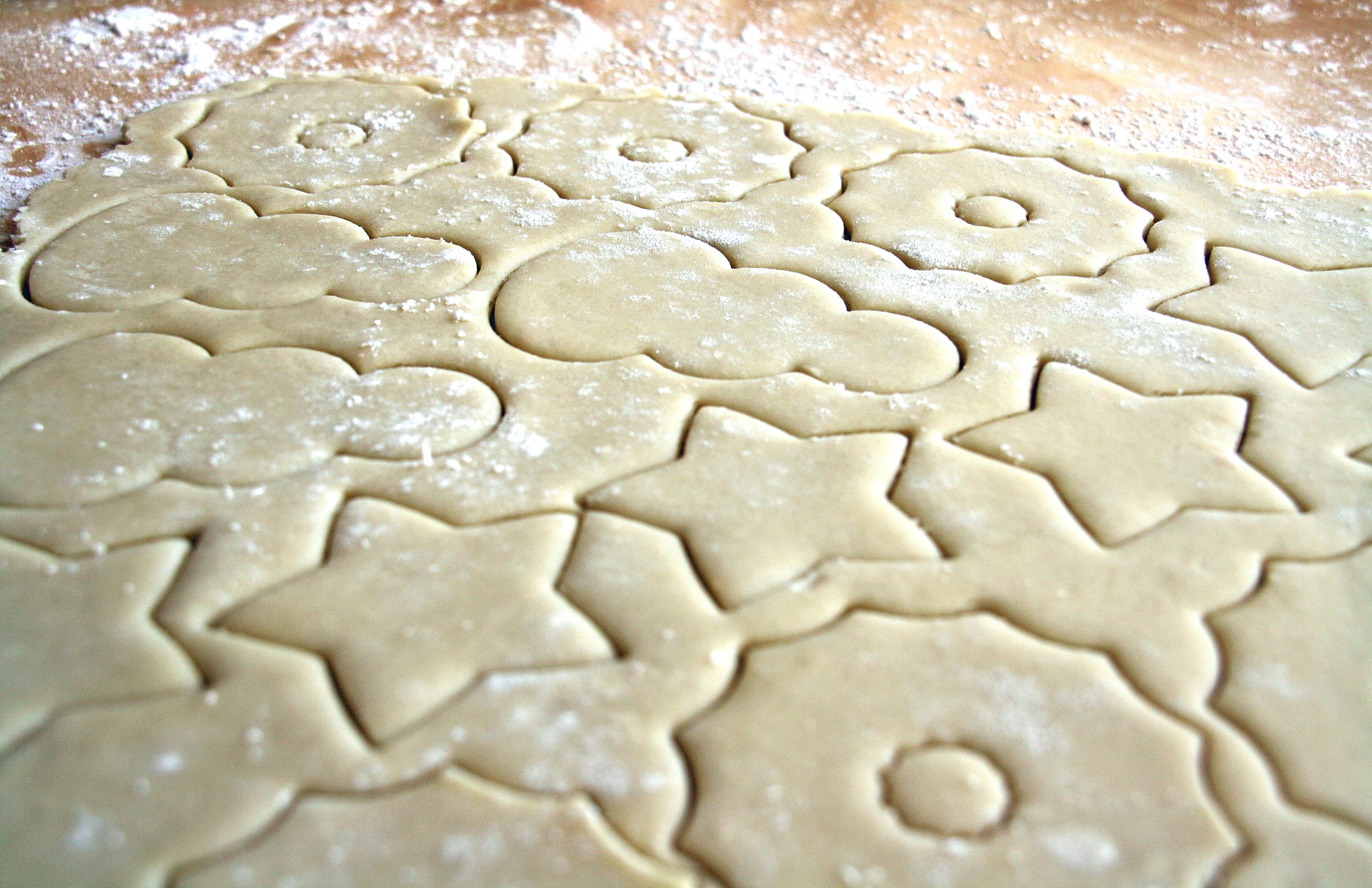

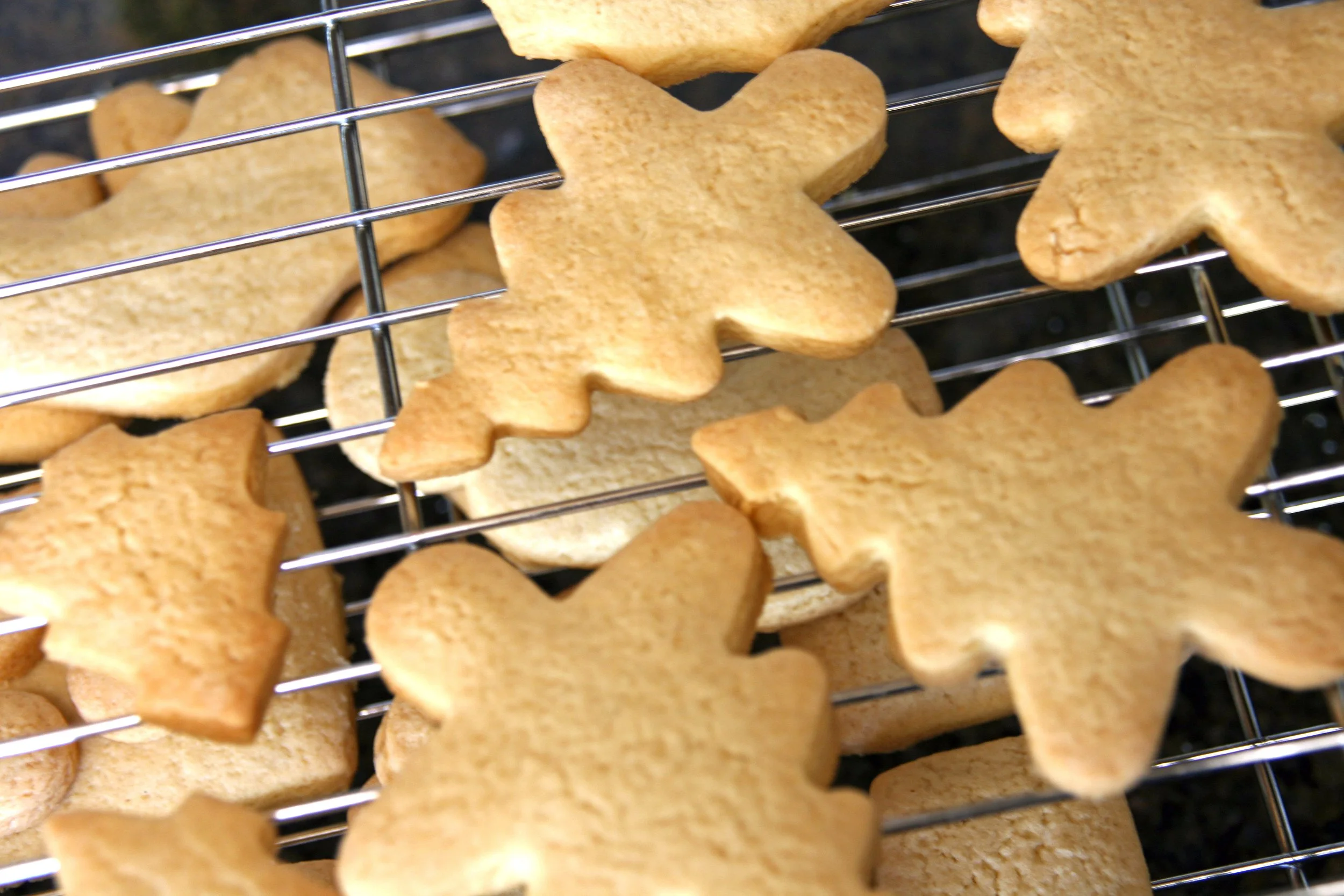
My new job at the Georgia Archives was different than anything I’d done before, helping students and teachers find useful primary documents. Yet as I visited classrooms across the state, I began to get the sinking feeling that many kids aren’t interested in history. If young adults don’t care about the past, how can they understand their lives in the context of community or make sense of current events? After some mulling, I realized my love of history began with my grandparents, so that’s where I turned. I slipped family stories and show-and-tell artifacts into my presentations. Then I started baking Teacakes as a way to discuss old patterns of daily life—kitchen chores, subsistence farming, the industrial revolution, technological advances, and even topics such as gender roles. I stopped having trouble getting the kids to pay attention. The recipe brought the gifts of making my job easier and helping others connect with history.
One day at work I received an email from the University of Georgia Press saying someone attending one of my programs suggested that I should write a book about family recipes. I’d long written fiction in my spare time, yet my work with the Teacakes recipe now brought the gift of a nonfiction book contract. I was engaged to an Air Force officer, so finding a new career path just as I needed to move away from Georgia was a gift indeed. My husband and I gifted a copy of Ellen’s recipe along with a cookie cutter to everyone who attended our wedding. When we moved to California a few months later, I began writing about the Teacakes as an example of how to develop a sparsely written recipe and learn more about family through foodways.
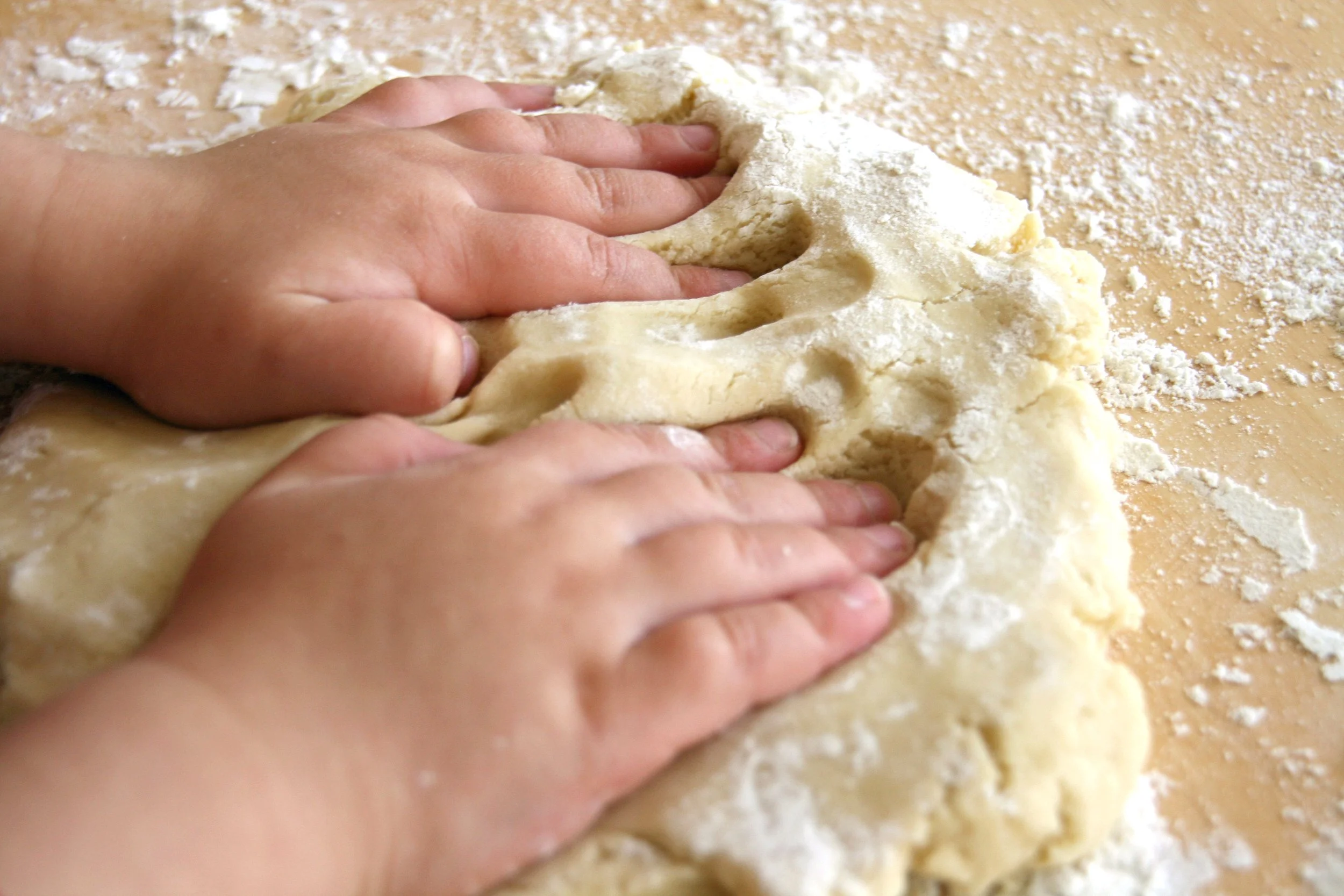
Far away from my homeland South, the Teacakes once again provided a welcome sense of tradition and was one of the first treats our baby son tasted—the sixth generation to enjoy them.
We moved back to Georgia while I prepared the final details so my book Preserving Family Recipes: How to Save and Celebrate Your Food Traditions could go to press. I’d explored the background of each ingredient, kitchen tool, and step. I’d researched the social history of the South. I was confident that I’d learned all I could from the Teacake recipe. The last thing I needed was a photograph of Ellen’s grave to add to Chapter Six, so I made the 600-mile trip to visit family still in the area. It was good to see them, yet awkward because in the last few years they had become somewhat radical politically.
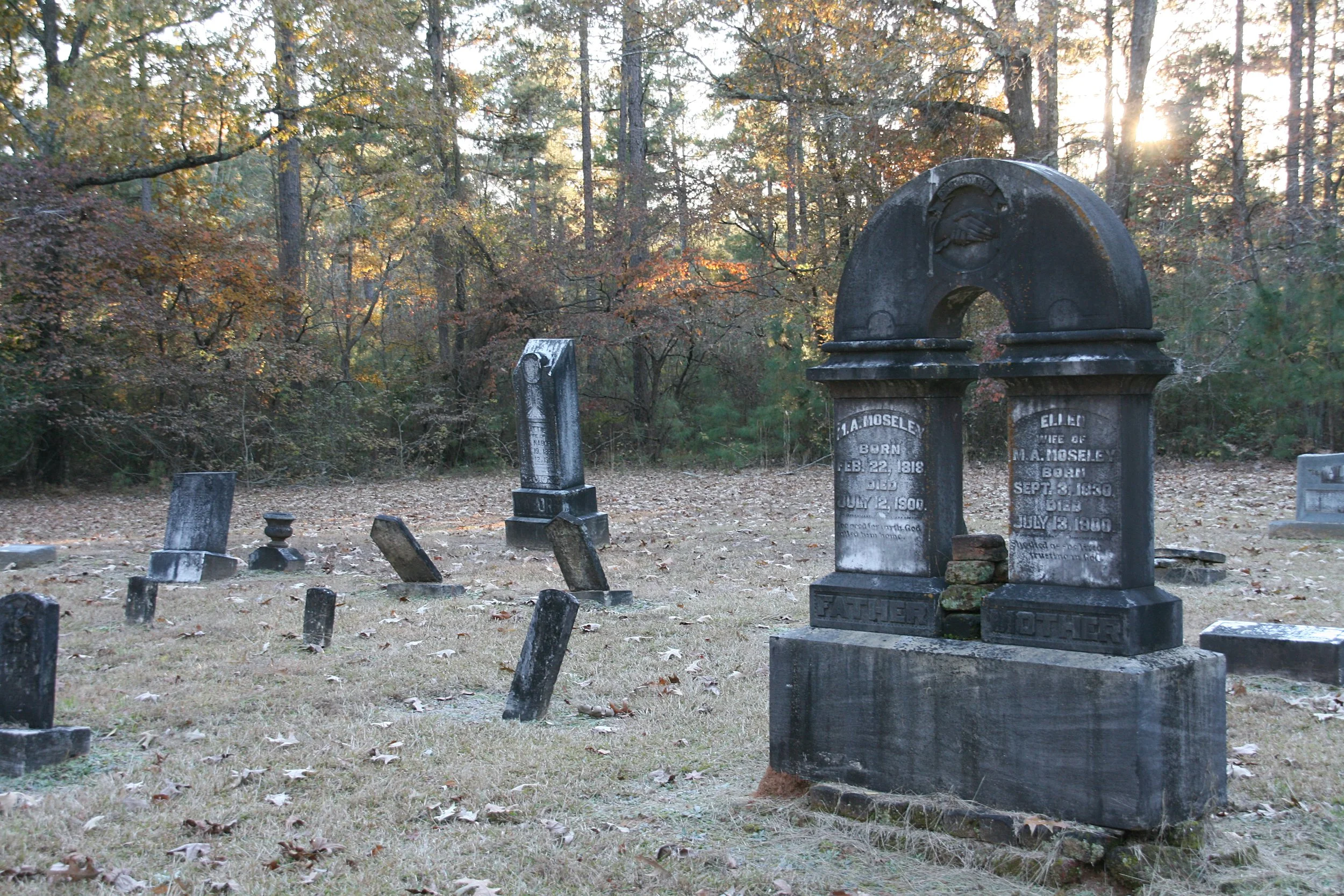
Chatting strictly about safe (even if mundane) topics, one frosty November morning my cousin and I wound our way down a dirt road covered in autumn leaves. Once nestled between farmed fields, the Moseley Cemetery had become a seldom-visited hollow in deep woods. I found Ellen’s mildewed stone and took photos. Then I pulled out a county cemetery guide to verify the tombstone dates. A footnote informed me that Ellen and her husband started the cemetery when their infant son died in 1862. The guide also noted the cemetery’s second burial. After the nearby Battle of Marks Mill in April 1864, a wounded Union soldier was found dead in the woods. He was unidentified and his unit was no longer in the area, so Ellen and her husband claimed the body and buried him in their new family cemetery. I think about Ellen and wonder if giving a stranger—the enemy—a resting place next to her lost child was a difficult decision. I wonder if in a time when tempers were high and the Red River Campaign had brought war to their doorstep she had had to defend that decision to her neighbors. I will likely never know. Politics and history are never easy or tidy yet following the trail of a family recipe brought me yet another gift, this time in the form of a story about a long-ago kindness that deeply inspires me over a century and a half later.
As a writer now deep into my career, I can also say this recipe gave me the gift of blurring parts of my life. Until I began using my grandparents’ recipes, artifacts, and stories in my work presentations, I’d kept home and work separate. Letting the past influence the writing projects I choose and personal experience shine through even academic pieces has given me a writing voice all my own. Every piece I write is something only I can bring to life due to my history, upbringing, and life experience. And now I can only wonder—what will the Teacake recipe’s next gift be?
More information about Preserving Family Recipes: How to Save and Celebrate Your Food Traditions can be found here.